Real protocols, not habits
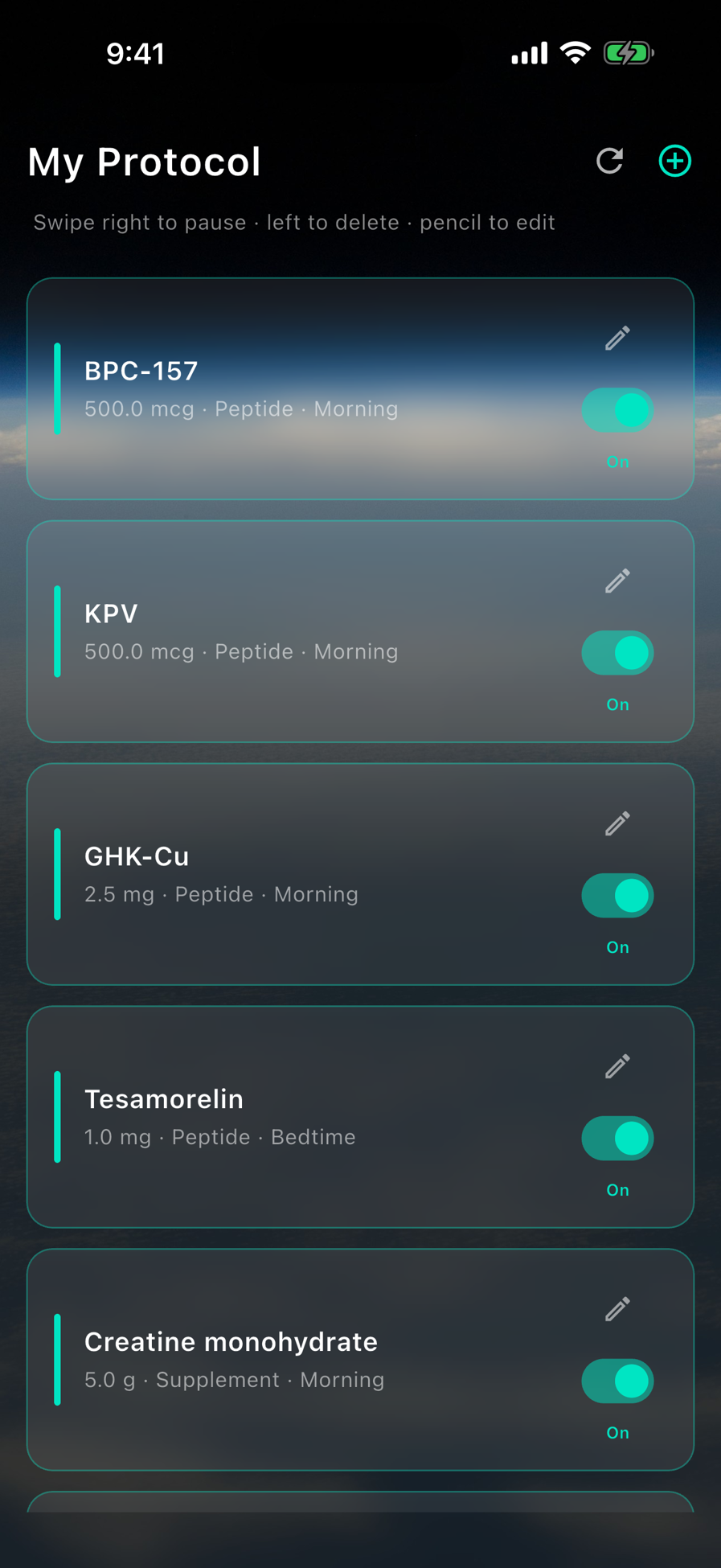
Doses, units, time-of-day blocks, specific weekdays, on/off cycle windows, and the date you actually started each item — so "since you began X" means something. Thirty-item stacks are normal here.
Protocol · Labs · Daily data
Cevren keeps your stack, your bloodwork and how you actually felt in one place — so you can ask what connects them.
Optional — what you wear helps us pick a beta group with genuinely different setups:
You're on the list. We'll be in touch before the next beta round.
No launch date yet. We'll email when there's something worth opening — not before.
What the app noticed
Your HRV decline lines up with the four nights you logged after 1am, not with the compound you started. Worth ruling out sleep timing before changing the stack.
Speculative · discuss changes with your clinicianIllustrative. Your ledger is your own data.
The gap
Wearables are very good at telling you what your body did last night. None of them know what you took, when you started it, or what your last panel said.
So the question that actually matters — is any of this working? — gets answered with spreadsheets, memory and guesswork.
Cevren is built for the one thing nothing else does: putting a thirty-item protocol, a hundred-marker panel and your daily outcomes in the same view.
The daily loop
Cevren is not another thing to maintain. Most of what it knows arrives on its own.
Your blocks are already built, with the right items on the right days and cycles handled. Tap through, rate energy, mood, sleep and recovery, and add a note if something's worth remembering.
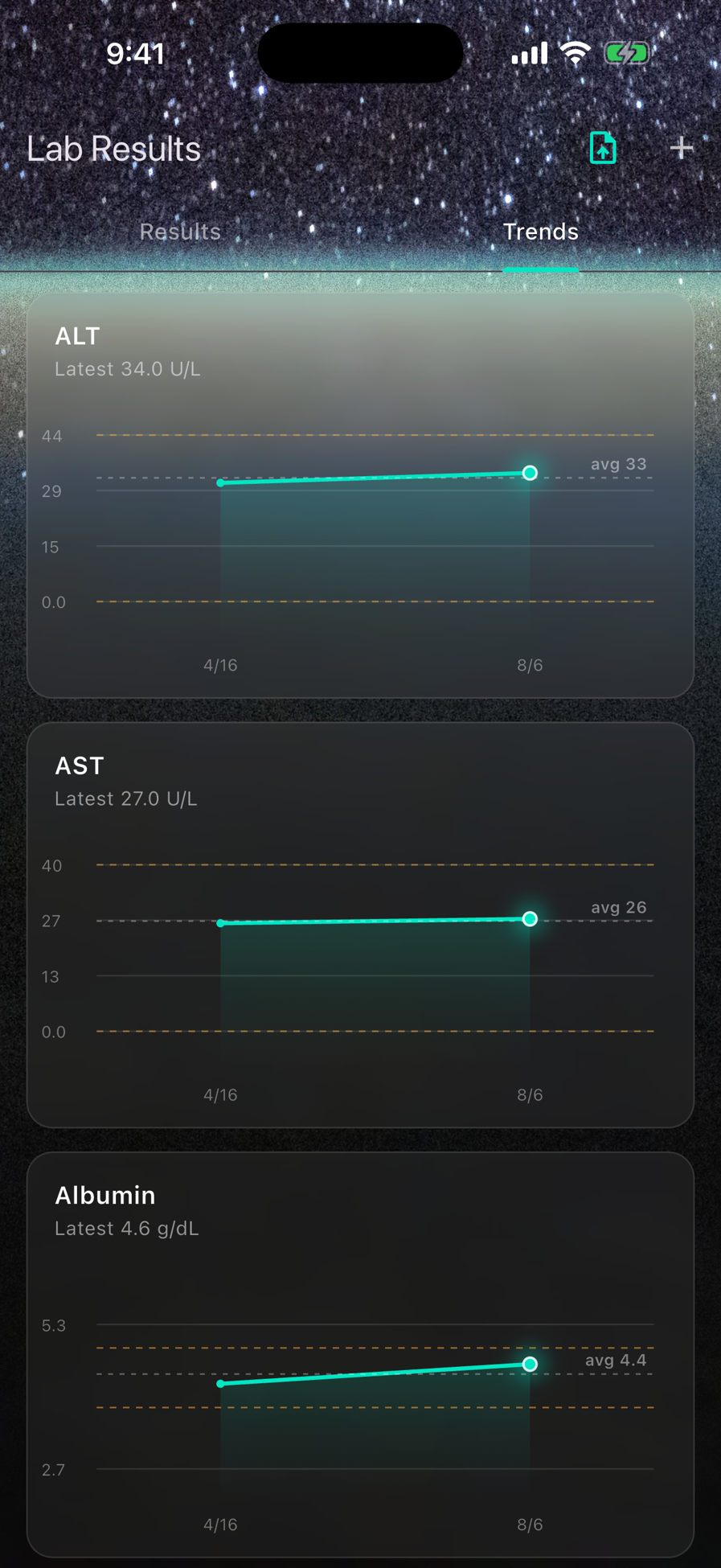
Sleep stages, HRV, resting heart rate, activity, body composition. No exports, no spreadsheets. Upload a lab panel when you get one and every marker is read and kept.
Open Insights and ask a question in plain language. It reads your protocol, three weeks of logs including your own notes, every lab marker, and your Health data — all at once.
Insights
Your wearable can tell you what happened. It can't see the compound you started, the marker that came back high, or the note you left yourself on a bad night. Cevren can see all of it at once — and it answers in plain language.
Every analysis is structured the same way, and the structure is the point. In plain terms is what the data shows. Worth noticing is what you might have missed. Speculative is clearly marked as speculation, and it ends by pointing you at a clinician rather than at a conclusion.
"IGF-1 at 256 sits just above the reference ceiling of 247. With a growth hormone secretagogue in the stack that is an expected consequence rather than a finding — reference ranges are population percentiles, not targets. Worth raising at your next review."
Actual output. Not a mock-up.A marker above range isn't automatically a problem, and software that flags it as one is wrong more often than it's right. Knowing what's in your stack is what makes the difference.
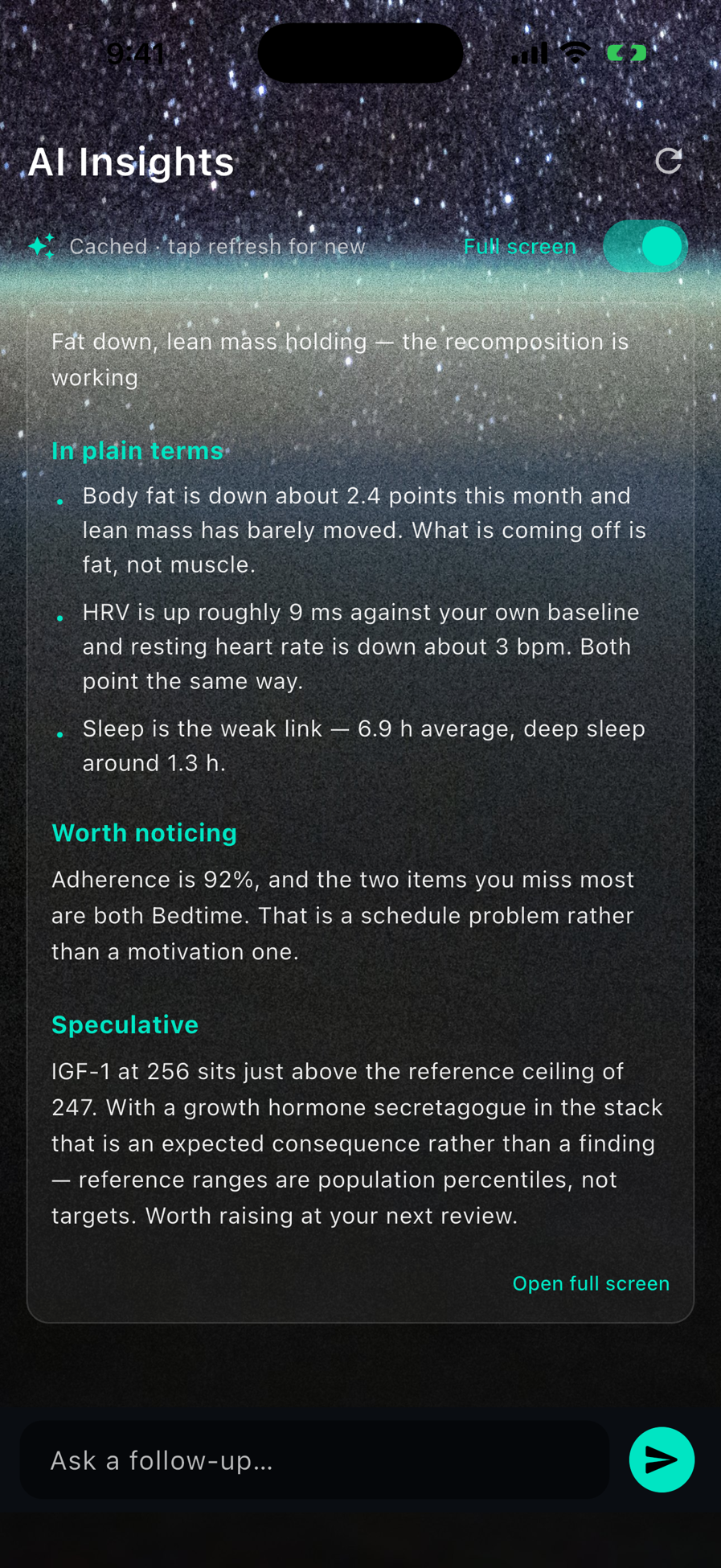
Ask a follow-up in plain language. It keeps your protocol, logs, labs and Health data in front of it the whole time.
Scoring
Most health apps let you pick a goal and then change nothing. Cevren weights the inputs differently for each one — and tells you which inputs it's leaning on, so personalisation is something you can see rather than something we claim.
Weighted toward how you felt and how you slept, because your goal is recovery and injury repair.
Illustrative weightings. The app shows yours.
Built and shipping
Doses, units, time-of-day blocks, specific weekdays, on/off cycle windows, and the date you actually started each item — so "since you began X" means something. Thirty-item stacks are normal here.
Photograph or upload a lab report. Every marker is extracted with its reference range for you to check before saving, then tracked over time. Hundred-marker panels in full — not the first forty.
Reads body fat and lean mass from Apple Health, because the scale alone can't tell losing fat from losing muscle — which is the whole question if that's your goal.
Sleep stages, HRV, resting heart rate, steps, active energy, blood oxygen and weight sync automatically, and sit beside everything you logged yourself.
Enter vial size and the dose you want. Get the water volume and the syringe draw for each option, constrained to what the vial physically holds.
One notification per time block, listing what's actually due — at times you set. Miss a day and you can log it back, up to a week.
Not built yet
None of this exists today, and we won't pretend otherwise. No dates either — we'd rather be late than ship something that overstates what it knows.
This list isn't fixed. Testers found the bedtime reminder firing four hours early, and body composition tracking is in the app today because the beta group made the case for it. If you're running a protocol and something here is missing, we'd rather hear it now than after launch.
In the app
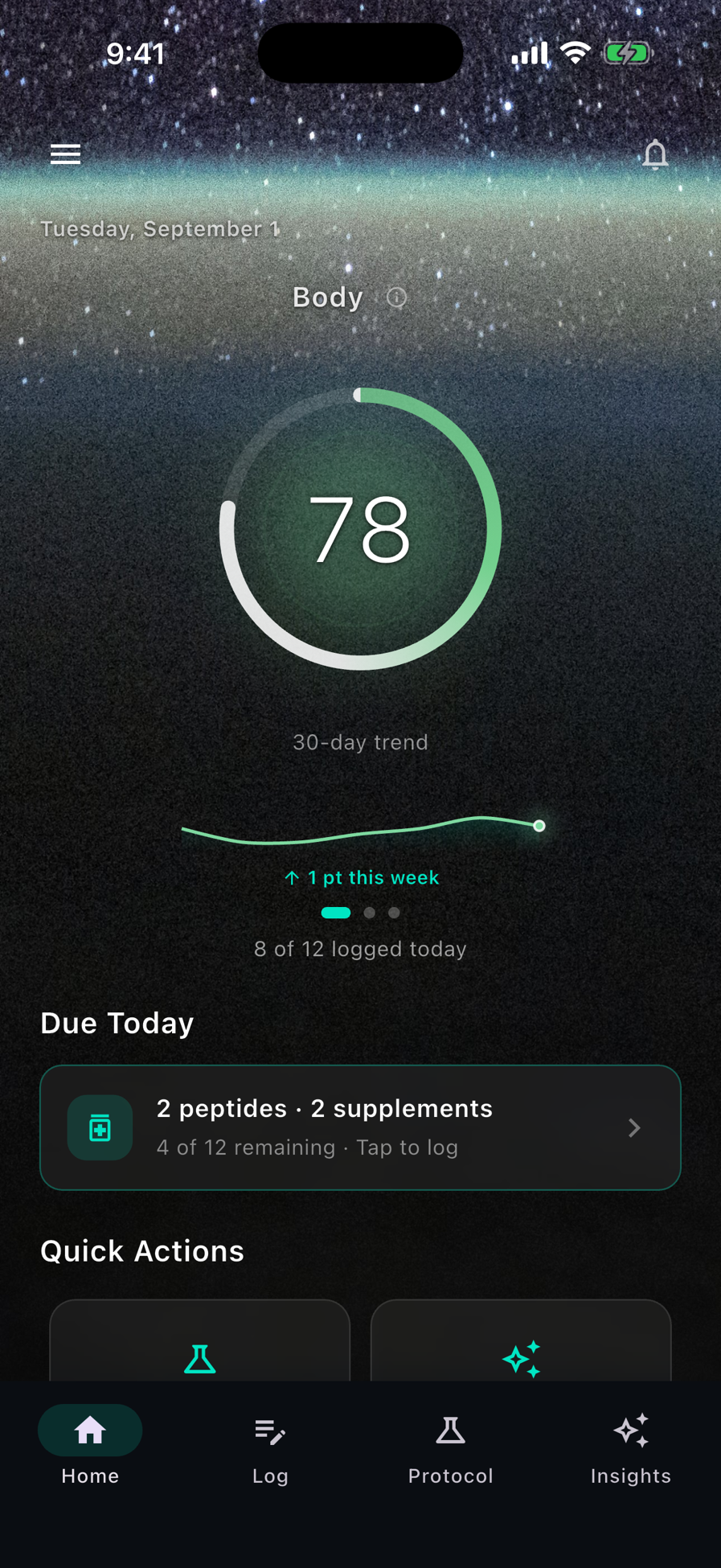
Where we draw lines
This category is full of confident software making claims it can't support. Most of our design decisions have been about what to leave out.
We won't tell you which compound drove a result. Analysis can surface what lines up in your data; it can't establish cause, and saying otherwise would be a lie with a chart attached.
We won't score you on "percentage of markers in range." That number improves when you order fewer tests, and reference ranges are population percentiles — not targets.
When there isn't enough history to say something honest, the app says so. An empty week reads as "building your baseline," never as a confident score.
If we ever read genetic data, it will be to inform what you're already taking. No APOE, no BRCA, no late-onset disease interpretation. That belongs with a genetic counsellor.
Beta access
Priority goes to people already running a protocol with a tracker and recent bloodwork — that's who Cevren is built for, and whose feedback we can act on.
It's a small group and it stays that way on purpose. You'll get direct access, your bug reports get read the same day, and what you ask for genuinely changes what gets built next.
You're on the list. We'll be in touch before the next beta round.